You’ve decided you want answers. Not another GP appointment where you get ten minutes and leave with a leaflet. An actual assessment – something thorough, something that tells you what’s going on, like a Mental Health Assessment from Therachange.
But you don’t know what to expect, and that uncertainty is probably making you hesitate. Let us break it down for you in this guide.
Key Takeaways
- A private mental health assessment typically takes 90 minutes, long enough to be clinically thorough and short enough to fit into a day
- It is a structured clinical conversation, not a test you can pass or fail
- You’ll receive a written report including a formal diagnosis where appropriate, usually within 10 working days
- No GP referral is needed to access a private assessment in the UK
- The assessment tells you what you’re dealing with so that any therapy or treatment that follows is the right fit
What Is a Mental Health Assessment?
A mental health assessment is a structured clinical evaluation carried out by a qualified mental health professional. Its purpose is to identify whether a diagnosable condition is present, understand how your symptoms are affecting your life, and determine what kind of support or treatment would actually help. ¹
It’s not therapy. It’s the clinical step that comes before therapy, the one that tells you what you’re treating. Many people spend months or years in the wrong kind of support simply because no one took the time to assess them properly first.
How Long Does a Mental Health Assessment Take?
A private mental health assessment with Therachange lasts 90 minutes. That might sound longer than you expected. It’s intentional.
A thorough clinical assessment cannot be done in 20 or 30 minutes. Rushing it risks missing things that matter. The 90-minute session gives your clinician enough time to understand your current symptoms, your personal history, how things are affecting your daily life and relationships, and what you’ve tried before. That full picture is what makes the written report meaningful and what ensures that any treatment recommendation actually fits you.
What Happens During a Private Mental Health Assessment in the UK?
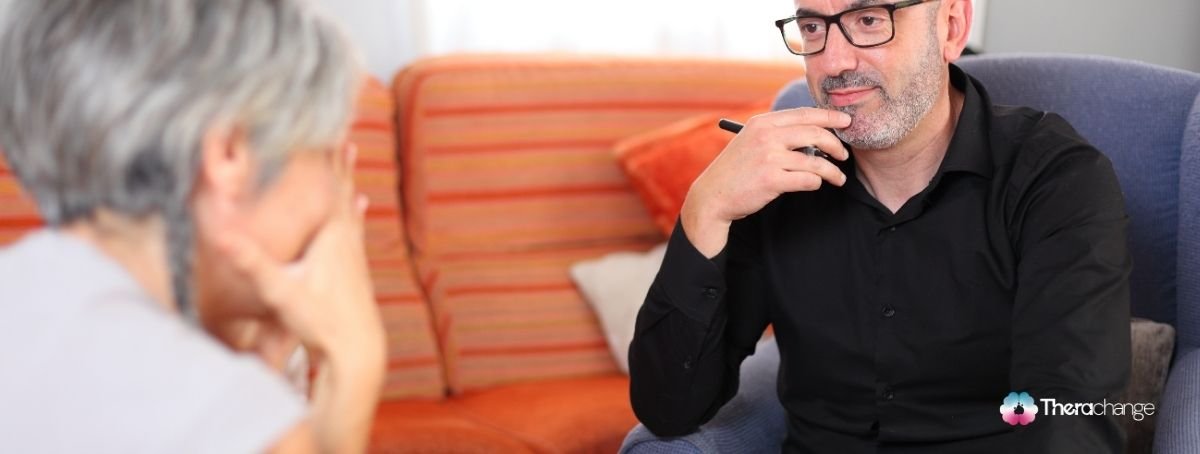
The session is conducted online, by video, with an NMC-registered mental health nurse. NMC stands for Nursing and Midwifery Council, the professional regulator for nurses in the UK. The clinician is fully registered and experienced in clinical mental health assessment.
What the clinician will ask about
You’ll discuss your current symptoms and how long you’ve been experiencing them, how your difficulties are affecting your work, relationships, and daily functioning, your personal and family mental health history, and any previous treatment or diagnosis you’ve had. There are no trick questions. There are no right or wrong answers. The more openly you can speak, the more useful the assessment will be.
Validated clinical screening tools
Alongside the conversation, your clinician will ask you to complete validated screening questionnaires during the session. These are standardised tools used across NHS and private clinical settings to measure the nature and severity of your symptoms. They add a layer of clinical rigour that a conversation alone can’t provide.
What happens at the end of the session
Your clinician will walk you through what they observed, explain the likely clinical picture, and set out what to expect from your written report. You won’t leave the session not knowing what comes next.
What to Expect from a Mental Health Assessment Report
Your written clinical report arrives within 10 working days of your session. Most clients receive theirs within six to eight working days. It includes a formal diagnosis where the clinical criteria are met, a plain-English explanation of what that means, a personalised treatment pathway outlining which therapeutic approach is indicated for your situation, and GP-ready documentation your doctor can act on immediately.
The report uses ICD-11 and DSM-5 frameworks, the same diagnostic standards used across NHS and private psychiatric services in the UK. That matters because it means your GP, any specialist, and most employers or universities will recognise and accept it.
What if no diagnosis is given?
Not every assessment results in a diagnosable condition. That’s a valid clinical outcome, not a failure. If no specific diagnosis applies, your report will still include a thorough summary of your presenting concerns, clinical observations, and clear guidance on what kind of support is appropriate. You will always leave with a concrete next step.
What Happens After Your Assessment?
The assessment gives you clarity. What you do with that clarity is up to you. Many people use their report to have a more productive conversation with their GP, finally get a prescription or referral they’d previously been denied, or begin therapy knowing it’s the right approach for their specific diagnosis.
If you choose to continue with Therachange after your assessment, your report tells the therapy team exactly who to match you with. No starting from scratch. No explaining yourself again. The assessment does that groundwork for you.
If you’re ready to find out what’s actually going on, you can book your private mental health assessment, no GP referral needed, with same-week appointments available.
Frequently Asked Questions
Can I have a private mental health assessment online?
Yes. Therachange assessments are conducted entirely online via secure video. You don’t need to travel anywhere. You join from wherever you feel most comfortable, whether that’s at home, at work during a lunch break, or anywhere else.
Who carries out the assessment?
Your assessment is conducted by an NMC-registered mental health nurse. This is the same professional standard recognised by the NHS. Therachange’s clinical oversight is led by Rebecca Wilson, an advanced clinical practitioner and independent prescriber with over 15 years of NHS and private mental health experience.
Do I need to prepare anything before my assessment?
There’s nothing formal to prepare. It may help to jot down a few notes beforehand: when your difficulties started, what they feel like day to day, and anything you’ve already tried. But you don’t need to arrive with a prepared speech. The clinician is trained to draw out the relevant information through the session itself.
Can a private mental health assessment diagnose anxiety, depression, or PTSD?
Yes. Therachange assessments can identify and formally diagnose a wide range of conditions, including anxiety disorders, depression, PTSD, OCD, eating disorders, bipolar disorder, burnout, and personality presentations. Where the clinical criteria are met, you receive a formal written diagnosis using ICD-11 and DSM-5 standards.
Will my GP accept the report from a private mental health assessment?
Yes. The report is written in clinical language specifically designed for GP use. It covers the diagnosis, clinical rationale, and recommendations for medication or further referral. Because the assessment is conducted by an NMC-registered clinician, GPs recognise and act on it.
What if I’m nervous about what the assessment might find?
That’s a very common feeling. Most people describe the session as less daunting than they expected. The clinician’s role is not to judge you or deliver a verdict; it’s to understand your experience and give you accurate, useful information. Many clients say that simply having their experience taken seriously and named clearly is itself a relief.
Is a private mental health assessment the same as a psychiatric assessment?
They are similar but not identical. A psychiatric assessment is carried out by a psychiatrist, who is a medical doctor. A clinical mental health assessment, such as the one Therachange provides, is conducted by an NMC-registered mental health nurse. Both produce formal written reports and can result in clinical diagnoses. The Therachange assessment uses the same ICD-11 and DSM-5 frameworks used in psychiatric settings.
References
[1] NHS England (2024) Mental health assessments. Available at: https://www.nhs.uk/mental-health/social-care-and-your-rights/mental-health-assessments/