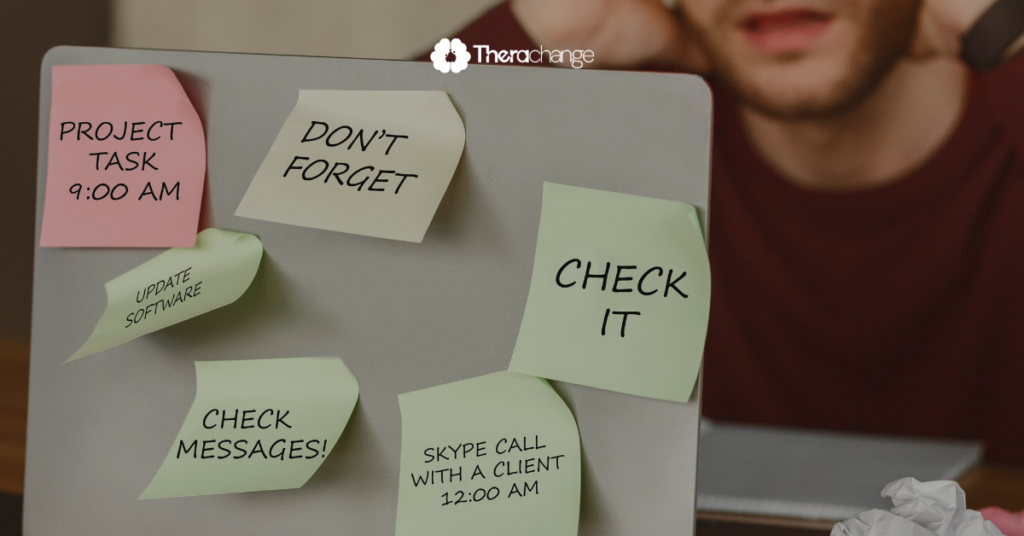

You keep waiting to be found out. The promotion came through, the project went well, the feedback was positive, and yet some part of you is convinced it was luck, timing, or just that nobody has looked closely enough yet.
If this sounds familiar, you are not alone, and there is a name for it: imposter syndrome.
Disclaimer: The information in this article is for general guidance only and does not constitute medical or therapeutic advice. Always consult a qualified clinician about your own health and do not make changes to treatment based solely on what you read here.
Key Takeaways
- Imposter syndrome describes persistent feelings of self-doubt and fraudulence despite real evidence of competence
- UK research shows the majority of professionals have experienced it, with women affected at higher rates than men
- It is not a clinical diagnosis but a recognised psychological pattern with well-understood causes
- CBT (Cognitive Behavioural Therapy) directly targets the distorted thinking patterns that keep it going
- Getting support is a practical step, not an admission of failure
What is imposter syndrome?
Imposter syndrome, originally called the “imposter phenomenon” by psychologists Pauline Clance and Suzanne Imes in 1978, describes a pattern of feelings; inadequacy, fraudulence, and fear of being exposed, that persist despite clear evidence that they are not warranted.
People experiencing it tend to dismiss their own successes as luck, timing, or the result of deceiving others, while privately believing they are less capable than those around them think.
It is not a clinical diagnosis. You will not find it in the DSM-5. But it is widely studied, well-recognised, and, for many people, genuinely disruptive to daily life and career progression.
How common is imposter syndrome in the UK?
More common than most people realise, partly because it thrives on silence.
A 2025 survey of over 8,000 professionals by Hays found that 64% had experienced feelings of imposter syndrome at work, with women significantly more affected (70%) than men (58%).¹
A separate survey of 2,500 UK workers by Indeed found that 94% of those who had experienced it had never discussed it at work.²
The pattern is consistent across studies: it is widespread, it affects people at every level, and almost nobody talks about it.
| Group | Affected (%) | Source |
| All professionals surveyed | 64% | Hays, 2025 |
| Women | 70% | Hays, 2025 |
| Men | 58% | Hays, 2025 |
| Never discussed it at work | 94% | Indeed/YouGov, 2022 |
Why do I feel like a failure even when things are going well?
Imposter syndrome runs on a loop. You take on a challenge, succeed, and then attribute the success to something external: luck, a lenient interviewer, or a fluke. The fear of being found out increases because now the bar is higher.
So, you work harder, succeed again, and attribute it to luck again, and the cycle continues.
This is not the same as everyday self-doubt or healthy humility. The difference is that ordinary self-doubt usually fades when evidence comes in.
With imposter syndrome, the evidence never quite lands.
- Compliments are discounted.
- Achievements feel precarious.
- Criticism, even minor, confirms everything you already feared.
Common signs of self-doubt at work
- Feeling like you do not deserve your role, even when you have the credentials and track record
- Over-preparing as a way of managing fear of being exposed
- Struggling to accept praise or take credit for your work
- Comparing yourself to colleagues and concluding you are behind
- Avoiding new opportunities because the risk of being found out feels too high
- Feeling relieved when things go well, but anxious rather than confident because now there is more to lose
What causes imposter syndrome?
It tends to emerge in specific conditions: competitive environments where performance is highly visible, career transitions where you are new and unsure, and fields where standards are hard to measure (creative work, leadership, research).
It is also common when you are the first in your family to reach a certain level, or when you are from a group under-represented in your field.
The Hays research found that women are more likely to experience imposter syndrome as their career progresses, with nearly half saying it worsens the further they advance.¹ This pattern points to something structural as well as psychological: imposter syndrome is not simply a personality trait but is shaped by the environments people move through.
How CBT can help with imposter syndrome
Cognitive Behavioural Therapy, or CBT, is a structured, evidence-based approach that works by helping you identify and challenge the distorted thinking patterns driving your feelings. For imposter syndrome, that typically means patterns like catastrophising (assuming the worst), discounting positives (dismissing any evidence that you are doing well), and all-or-nothing thinking (either I am a fraud or I am brilliant, nothing in between).
A controlled trial with medical students found that eight sessions of CBT led to significant improvements in self-esteem, mental health, and reduced unhelpful thought suppression.⁴ These are structured interventions, not general reassurance, and that distinction matters.
If self-doubt at work is affecting your performance, your wellbeing, or your ability to take opportunities that should be yours, CBT at Therachange offers a structured way to work through the thinking patterns underneath it. Sessions are 45 minutes, fully online, and available without a waiting list. You can find out more or book now.
Frequently Asked Questions
Is imposter syndrome the same as low self-esteem?
Not quite. Low self-esteem is a general, fairly stable sense of being less worthy or capable. Imposter syndrome tends to be more situational and performance-focused. People with imposter syndrome often have reasonable self-esteem outside work but fall apart when their competence feels visible or measurable. The two can overlap, but they are not the same thing.
Does imposter syndrome ever go away on its own?
For some people it does ease over time, particularly as experience accumulates. But without addressing the underlying thinking patterns, many people find it follows them up the career ladder rather than fading. Therapy can speed up that process significantly by giving you tools to interrupt the cycle rather than waiting for it to run out of fuel on its own.
Can imposter syndrome affect people outside work?
Yes. It shows up in parenting, in relationships, in creative pursuits, and in any context where someone is putting themselves out there and feels uncertain about whether they measure up. The workplace context gets the most research attention, but the psychological pattern is not limited to professional settings.
If I talk to a therapist about imposter syndrome, will they take it seriously?
A good therapist will. Imposter syndrome might not be a formal diagnosis, but the thinking patterns driving it are well understood and very workable using CBT and related approaches. You do not need to be “bad enough” to deserve support. If the self-doubt is affecting your life, that is reason enough.
References
[1] Hays (2025) Imposter Syndrome Research. Reported by People Management, May 2025. Available at: https://www.peoplemanagement.co.uk/article/1919598/exclusive-seven-10-women-experience-imposter-syndrome-work-research-finds [Accessed: July 2026].
[2] Indeed/YouGov (2022) Working on Wellbeing. Reported by Onrec, May 2022. Available at: https://www.onrec.com/news/statistics/3-in-5-uk-employees-experience-imposter-syndrome-94-haven%E2%80%99t-discussed-it-at-work [Accessed: July 2026].
[3] Reza, N. et al. (2024) Assessing the Efficacy of Cognitive-Behavioral Therapy to Reduce Global Prevalence of Imposter Syndrome Among Family Physicians. Journal of Student Research. Available at: https://www.jsr.org/hs/index.php/path/article/view/7019 [Accessed: July 2026].
[4] Abedini, M. et al. (2024) The Efficacy of Cognitive Behavioral Therapy on Mental Health, Self-esteem and Emotion Regulation of Medical Students with Imposter Syndrome. Available at: https://brieflands.com/journals/erms/articles/147868 [Accessed: July 2026].